

Barrier arms control traffic. They do not secure a site
For counting vehicles in and out of a lot at high cycle rates, nothing beats a barrier. Just be clear what it is for — a boom stops traffic, not intrusion.
- Boom length
- to 20 ft
- Cycle time
- 1.5–6 sec
- Duty
- Very high
How it works on a commercial site
Barriers earn their place where the traffic is heavy and the job is throughput: employee lots, visitor parking, weighbridges, yard entries with a gatehouse. A good barrier will run tens of thousands of cycles a year without complaint.
What a barrier will not do is keep anyone out. The boom breaks away on impact by design, because the alternative is a wrecked vehicle and a lawsuit. If the requirement is genuinely security rather than traffic control, we will point you at bollards or a crash-rated gate and explain the difference in writing.
- Very high cycle rates without duty-cycle problems
- Fast open times keep queues moving at peak
- Integrates with readers, ticketing, and LPR
- Breakaway boom limits vehicle and liability damage
- Pairs with bollards where security is the real need
Typical working range
| Boom length | Up to roughly 20 ft; longer booms are articulated or folding |
|---|---|
| Cycle time | 1.5 to 6 seconds, depending on boom length and model |
| Duty rating | Continuous / very high cycle |
| Detection | Inductive ground loop, radar, or photo eye |
| Access integration | Card, fob, keypad, LPR, ticketing, intercom |
| Security value | Traffic control only — not vehicle mitigation |
| Power | 120 V mains; battery backup and solar available |
| Options | Skirted boom, LED boom, articulated boom for low clearance |
If the brief mentions preventing forced entry, a barrier is the wrong product. Say so early and we will scope bollards or a crash-rated gate instead.
Common questions
Can a barrier arm stop a vehicle?
No, and it is not designed to. The boom is a breakaway component. If you need to stop a vehicle, that is a bollard or a crash-rated gate, and it is a different specification with a different budget.
How many cycles a day can a barrier handle?
Commercial barriers are built for continuous duty and routinely run thousands of cycles a day. Cycle count is rarely the limiting factor; loop and reader reliability usually is, which is why we spec those carefully.
Can it read licence plates instead of using cards?
Yes. LPR works well for fleet and employee lots where the same vehicles return daily. We usually pair it with a keypad or intercom fallback for visitors and for plates the camera cannot read.
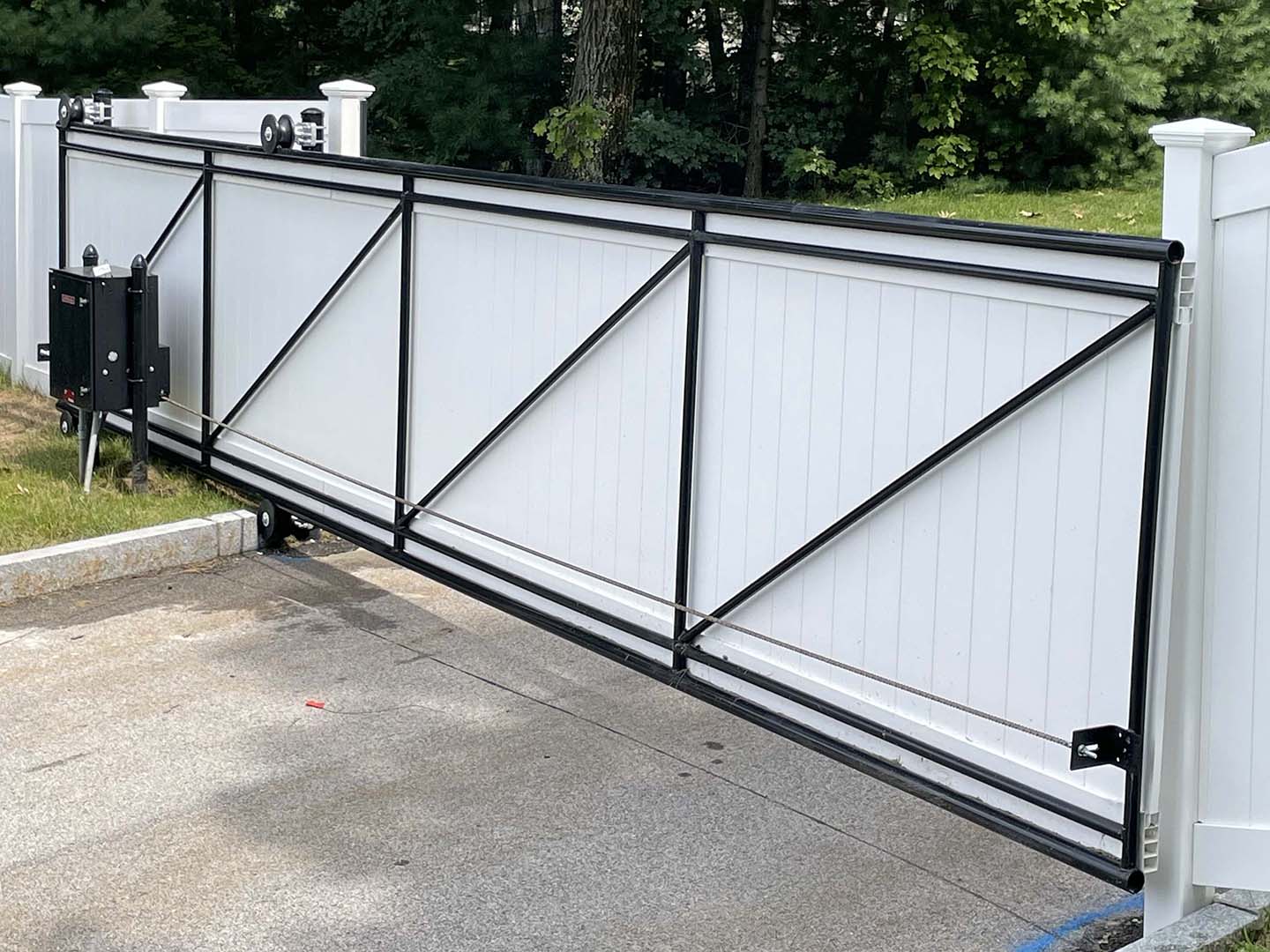
Need a gate that holds up to commercial duty?
We survey the opening, size the operator to the leaf, and hand you a written scope you can put out to bid.
Request a site survey
Send the opening width, the traffic it sees, and what the site has to do. Prefer to talk now? Ring (617) 501-7139 and you’ll reach a person, not a phone tree.
- No cost, no obligation, no pressure
- Written scope you can put out to bid or hand to a GC
- Most replies inside one business day